
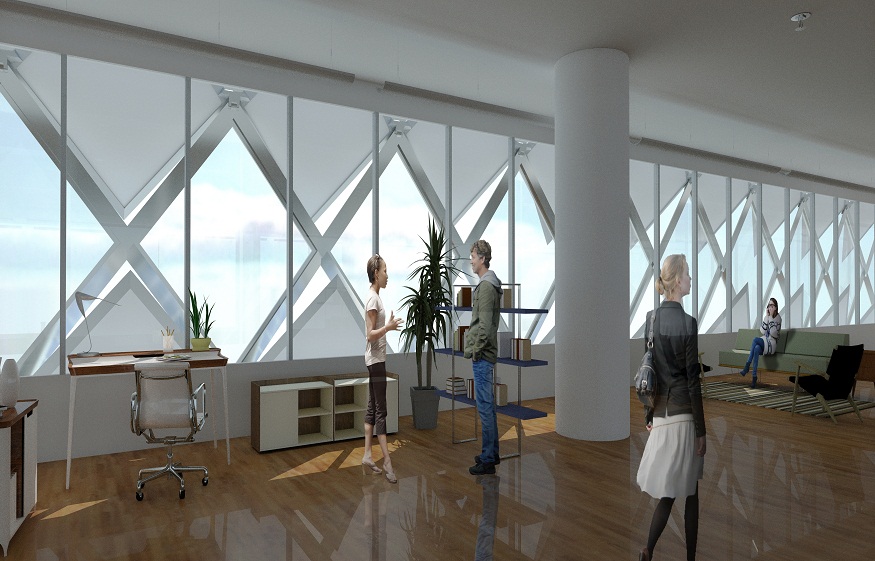
Architecture today carries the weight of human aspiration while responding to the urgent call for sustainability, as per Ali Ata. In this journey, solar skin facades stand as a luminous milestone, offering a vision where buildings no longer remain passive but active participants in renewable energy generation. These facades do not compromise beauty for utility; rather, they re-imagine beauty through utility, making every wall a radiant surface that tells a story of ecological consciousness. Much like a trail weaving across deserts, mountains, and coastlines, solar skins reveal shifting textures and horizons, reminding us that the path forward in architecture is not only functional but also deeply aesthetic and resonant with the landscapes of our imagination.
Aesthetic Integration of Solar Technology
- The façade becomes a landscape in its own right, alive with patterns while producing energy according to Ali Ata.
- This approach transforms solar panels from mechanical add-ons into seamless artistic expressions, with surfaces designed in varied colors, textures, and transparencies that echo both natural motifs and urban life.
- The visual integration ensures that sustainability is not a silent option but an open declaration on the building.
- These designs allow architects to move beyond technical efficiency and step into the realm of citizenship, where each building exterior narrates a tale of beauty interwoven with responsibility.
Transformative Urban and Environmental Impact
- These surfaces absorb sunlight and generate renewable power, reducing dependence on fossil fuels while purifying the urban atmosphere.
- The transformation flows into the cultural fabric of cities, where every façade becomes both an energy source and a visual marker of ecological consciousness, infusing neighborhoods with pride and purpose.
- Historic districts, too, find resonance in this approach, as solar skins can be adapted subtly to preserve traditional character while still participating in the pursuit of modern sustainability.
- The environmental impact stretches outward, reminding us that every single façade contributes to the larger journey of mitigating climate change and creating harmony between human structures and natural cycles.
Versatility and Innovation in Application
- These façades lend themselves to skyscrapers, cultural centres, universities, or residential complexes alike, adjusting their form and function to the character of their surroundings.
- Technological innovations continue to expand the possibilities—lightweight, flexible, and semi-transparent materials open new creative paths for architects, allowing them to mould designs freely across varied landscapes.
- Beyond capturing sunlight, the façades provide natural insulation and shade, wrapping interiors in protective layers much like tree canopies shield pathways, thereby reducing reliance on artificial climate control.
- This combination of adaptability and creativity ensures solar skins remain at the forefront of architectural evolution, not as temporary solutions but as guiding markers pointing toward a more resilient, radiant, and sustainable environment, according to Ali Ata.
Solar skin facades trace a vivid route into the future, where every building is no longer a silent structure but a living landscape—glowing, purposeful, and self-sustaining. They redefine the language of architecture, proving that the quest for renewable energy can unfold hand in hand with the pursuit of sustainability. Much like a trail across desert ridges and coastal cliffs that reveals unexpected views at every turn, these facades promise skylines alive with light, resilience, and artistry. The journey they inspire is one where sustainability and aesthetics no longer walk separate paths but converge into a single trail, leading cities and communities toward a harmonious coexistence between design, innovation, and nature.