
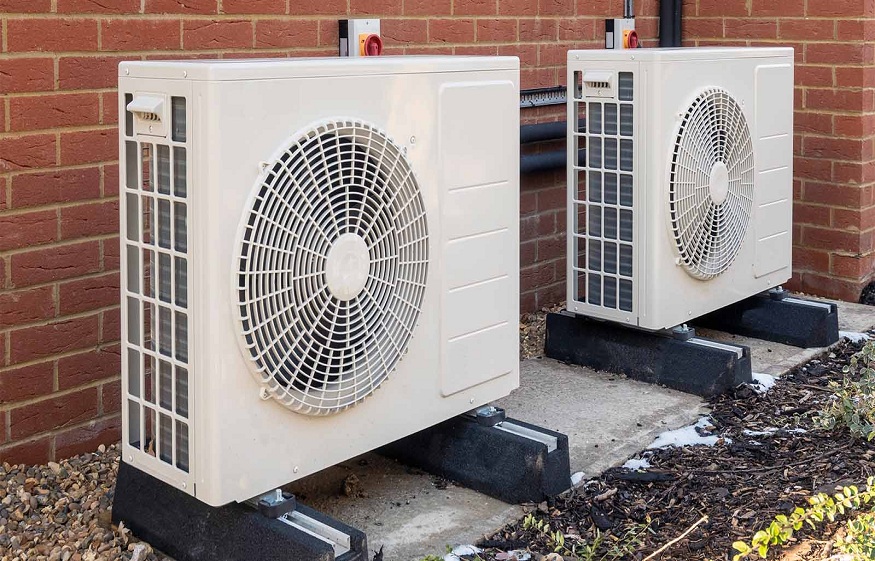
Selecting the right heat pump capacity is one of the most important decisions for Indian homeowners. Capacity determines how much heating or cooling a system can deliver within a given time. In a country like India, where climate conditions vary dramatically from extreme summer heat in North India to mild winters in the South, the correct sizing becomes even more critical.
Understanding Heat Pump Capacity
Heat pump capacity refers to the amount of heat the system can transfer per hour. It is typically measured in Tons BTU per hour or kilowatts. One Ton equals 12000 BTU per hour. A higher capacity means the system can manage a larger space or cope with more demanding weather conditions.
Read More : How Vacuum Cleaner Price Impacts Performance and Longevity
It is important to note that capacity does not represent electricity consumption. It indicates output. Power usage depends on the system’s efficiency rating and how long it operates.
Why Proper Sizing Matters in India
In India, peak summer temperatures often cross 40 degrees Celsius in cities such as Delhi, Jaipur and Nagpur. At the same time, regions like Bengaluru or Pune experience moderate conditions year-round. Because of this diversity, choosing capacity based only on room size is not enough.
An undersized heat pump may run continuously during peak summer without achieving comfortable cooling. This increases electricity consumption and reduces system lifespan. On the other hand, an oversized unit cools or heats the room too quickly and switches off frequently. This leads to uneven temperature distribution, higher humidity and unnecessary energy waste. Correct capacity ensures steady performance, balanced humidity control and lower long-term costs.
Common Residential Capacities in the Indian Market
1. Low-Capacity Heat Pumps (Ideal for Small Families)
Capacity Range: 80 Litres to 180 Litres
These models are designed primarily for residential use, especially apartments or small households with moderate hot water requirements.
Suitable For:
- 2 to 4 family members
- Bathrooms with standard shower usage
- Homes with limited installation space
Why Choose This Range?
- Lower upfront investment
- Energy-efficient for daily domestic use
- Compact design with integrated storage
This range is perfect when hot water demand is predictable and limited to household activities like bathing and washing.
2. Mid-Capacity Heat Pumps (Large Homes & Small Commercial Use)
Capacity Range: 300 Litres to 455 Litres
These systems cater to larger families or properties where multiple bathrooms may operate simultaneously. Some models in this range are suitable for small commercial establishments as well.
Suitable For:
- Large residential villas
- Guest houses
- Small clinics or salons
- Small-scale commercial kitchens
Why Choose This Range?
- Higher storage ensures an uninterrupted supply
- Better suited for peak-hour usage
- Efficient for moderate commercial demand
This capacity level offers a balance between residential comfort and light commercial performance.
Read More: Comparing RO Plant Models For Office Use
3. High-Capacity Commercial Heat Pumps
Capacity Output: Approximately 19 kW to 84 kW (Industrial Range)
Unlike residential models that are measured in litres (storage), commercial heat pumps are often rated in kW (heating capacity). These systems are built for continuous, large-scale hot water generation.
Suitable For:
- Hotels and resorts
- Hospitals
- Large restaurants
- Industrial facilities
- Institutional buildings
Why Choose This Range?
- Continuous hot water supply
- Designed for heavy-duty operations
- Higher heating output and durability
These models focus more on performance output rather than tank storage alone, making them ideal for high-consumption environments.
Conclusion
Heat pump capacity directly influences comfort, efficiency, and operating costs. In India, where weather patterns vary widely and summer loads can be intense, proper sizing becomes even more important. Instead of choosing capacity based only on room size, users should consider climate, building structure, insulation and usage patterns. A well-sized heat pump water heater ensures reliable performance throughout the year, controlled energy bills and long-term durability, making it a smart and future-ready investment for Indian homes.